A student who can play scales perfectly but freezes when a friend says, “Let’s play something together,” has not reached the finish line. The best Asheville music teachers build technical skill, yes, but they also help students listen, adapt, take creative risks, and feel at home making music with other people. That matters in a city where music is not tucked away in a practice room. It is part of everyday life.
For a parent, choosing a teacher may start with a practical question: Which instrument does my child want to try? For an adult, it may be: Can I finally learn the songs I have loved for years? Those are great starting points. The more useful question is what kind of musician the student hopes to become – a confident beginner, a skilled solo player, a songwriter, a bandmate, or a performer ready for a local stage.
What Great Asheville Music Teachers Do Differently
A strong teacher meets students where they are without leaving them there. A first-time piano student needs a different approach than a guitarist who knows dozens of riffs but has never played with a drummer. An experienced vocalist may want help with range, control, and stage presence, while a young beginner may first need to learn how to keep a steady beat and enjoy the sound of their own voice.
Personalized instruction is where that process begins. Good lessons have structure, but they are not one-size-fits-all. Teachers can use favorite songs to introduce rhythm, chords, ear training, reading, technique, and musical vocabulary. A student who loves punk may stay motivated by learning power chords and fast changes. A student drawn to Mozart may thrive with posture, phrasing, and music reading. From Metal to Mozart, the goal is not to make every musician sound the same. It is to give each person the tools to play with more freedom.
The teacher’s role also extends beyond correcting wrong notes. They help students set realistic goals, notice progress that may be hard to hear day to day, and work through the frustrating middle stage between “I want to play that” and “I can play that.” This kind of encouragement is especially valuable for young musicians, who often need permission to be beginners before they can become confident.
Credentials Matter, but Connection Matters Too
Training and performance experience are meaningful. A teacher who actively plays, records, writes, or performs brings firsthand knowledge of rehearsal etiquette, stage nerves, song arrangement, and the many small decisions that make a group sound good. Yet expertise alone does not guarantee a good fit.
The right teacher communicates clearly, listens closely, and knows when to challenge a student without overwhelming them. Parents should look for someone who can explain progress in plain language. Adult students should look for an instructor who respects their goals, whether that means playing at an open mic, joining a band, or simply enjoying a relaxing creative practice after work.
A trial lesson or consultation can reveal a lot. Does the student leave feeling energized? Does the teacher ask about musical interests? Is there a clear next step? The best fit often feels both welcoming and purposeful.
Choosing a Music Teacher for Your Goals
Before comparing schedules or instruments, name the outcome you want. It can change over time, but a starting direction helps shape the lessons. A child who wants to play with friends may benefit from private instruction plus a group class. An adult returning to piano after twenty years may want steady, low-pressure lessons with favorite songs built into the plan. A serious young violinist may need focused technique alongside opportunities to perform.
Consider these practical questions as you evaluate options:
- Does the teacher work with the student’s age, experience level, and preferred musical styles?
- Can lessons include the songs, skills, and goals that matter to the student?
- Is there a path beyond weekly lessons, such as ensembles, workshops, camps, or performances?
- Does the schedule make consistent practice and attendance realistic for your household?
Consistency is usually more valuable than intensity. A student who takes regular lessons, practices in manageable pieces, and performs occasionally will often make more lasting progress than someone who tries to cram music into an already overloaded schedule. For younger students, a weekly routine also turns music into a dependable part of life rather than another activity that comes and goes.
Private Lessons Build the Foundation
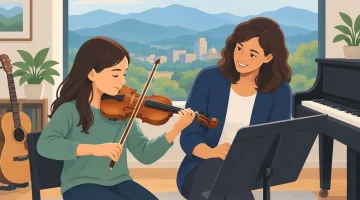
One-on-one lessons offer the attention that many musicians need to grow. A teacher can spot tension in a drummer’s grip, help a singer find healthier breath support, adjust a guitarist’s fretting-hand position, or select piano exercises that solve a specific coordination challenge. This direct feedback saves students from practicing the same roadblock over and over.
Private lessons also make room for individual taste. A teacher can help a banjo student learn an Americana standard, guide a cellist through classical repertoire, or show a young guitarist how the chords in a favorite rock song fit together. Music theory becomes more useful when students can hear it at work in music they genuinely enjoy.
There is a trade-off, though. Private lessons are personal, but they do not automatically teach the social skills of making music in a group. Timing with a metronome is valuable. Timing with a live drummer, bassist, and vocalist is a different kind of education.
Why Playing With Others Changes Everything
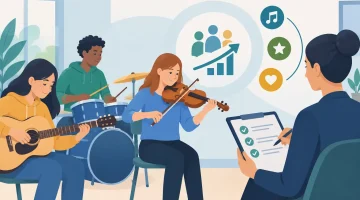
Band programs and ensemble classes give students a reason to use what they learn in lessons. They must listen beyond their own instrument, count rests, recover after mistakes, communicate during rehearsal, and support the song instead of trying to fill every empty space. Those are musical skills, but they are also confidence and teamwork skills.
For many students, the first group rehearsal is a turning point. The guitarist hears how one chord can change the whole sound when the bass joins in. The drummer learns that a steady groove serves the band better than the flashiest fill. The vocalist discovers how much stronger a performance feels when surrounded by peers who are working toward the same goal.
This is where performance opportunities matter. A low-stakes recital, a community event, or a live band gig gives students a concrete reason to prepare. Nerves are normal, and a caring program does not pretend otherwise. Instead, it helps musicians practice performing: entering the stage, starting a song, staying present after a missed note, and accepting applause with pride.
At Music Academy Asheville, students can pair individualized private lessons with Rock Academy band experiences designed to move learning from the classroom to the stage. Rising fourth through twelfth graders, along with adult musicians in the adult class, can collaborate on music ranging from blues and classic rock to punk, surf, hard rock, and Americana. The point is bigger than learning a set list. Students build friendships, learn how a band works, and see themselves as musicians in a real musical community.
Support at Home Makes a Difference
Parents do not need a music background to support a child’s progress. The most helpful approach is usually simple: create a reasonable practice routine, make space for the instrument, and show interest without turning practice into a daily argument. Asking, “What are you working on this week?” often works better than asking, “Did you practice?”
Celebrate effort as well as accomplishment. Learning a difficult measure, keeping a beat through an entire song, or volunteering to play in front of family are all signs of growth. Some weeks will be messy. School gets busy, fingers get tired, and motivation dips. A good teacher can adjust the plan, break a goal into smaller pieces, and help students reconnect with the music that made them want to start.
Adults deserve the same patience. You are not too old to begin, and you do not need to be naturally gifted to enjoy meaningful progress. Fifteen focused minutes can be enough to maintain momentum. The goal may be ambitious, but it should still fit your actual life.
Find a Place to Keep Growing
The right music teacher does more than help a student get through an assignment. They create momentum. Over time, a beginner learns a first song without stopping. A quiet child speaks up in rehearsal. An adult who thought they had missed their chance plays alongside other people and realizes they still have plenty to say.
Choose a learning environment that welcomes the musician you are now and gives you somewhere exciting to go next. Music is for everyone, and the next note is a good place to begin.