A beginner drummer can learn a surprising amount alone: a basic rock beat, a few fills, even a favorite song played along with a recording. The real question behind drum lessons versus self teaching is not whether one path is legitimate. It is which path gives you the skills, confidence, and musical experience you want most.
For some players, a video lesson and a practice pad are enough to get started. For others, especially students who want to play in a band or parents looking for a productive after-school activity, personal instruction provides a clearer path. Both options can work. The difference is what happens when motivation fades, a technique problem appears, or it is time to play with other musicians.
What Self Teaching Can Do Well
Self teaching has a major advantage: you can begin immediately. A pair of sticks, a pad, a kit, or even a quiet practice setup can open the door to rhythm. Online videos, play-along tracks, drum charts, and recordings make it easy to explore everything from Metal to Mozart, classic rock to funk, punk to Americana.
This approach also gives students room to follow their curiosity. A teenager who loves hard rock can spend an afternoon learning a favorite groove. An adult returning to music can practice after work without worrying about an appointment. That independence can be genuinely energizing.
Self teaching works especially well for players who are naturally organized, comfortable slowing recordings down, and willing to repeat fundamentals. A motivated learner can build coordination, learn common beats, and develop a growing song list through consistent practice.
The challenge is that progress is not always obvious from behind the drum kit. When you are teaching yourself, you choose what to work on, how long to stay with it, and whether it is truly improving. It is easy to spend most practice time on the fun parts while avoiding the skill that would make everything else easier.
Where Self Teaching Often Gets Stuck
Drums are physical. The way a player holds the sticks, sits on the throne, uses the bass drum pedal, or moves between hi-hat and snare affects sound, speed, comfort, and endurance. A beginner may not notice a tense grip or uneven stroke until it becomes a habit.
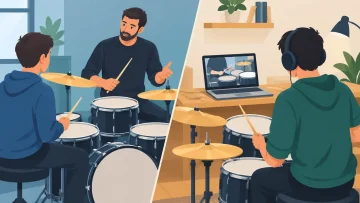
Online instruction can demonstrate good technique, but it cannot watch you play. A video cannot tell you that your right hand rushes the beat, your left hand disappears during fills, or your shoulders are tightening after ten minutes. Those details matter because drumming is as much about time and feel as it is about knowing where to strike the drum.
Self-taught drummers can also end up with gaps in their musical foundation. They may know impressive fills but struggle to count an eight-bar phrase. They may play along with a recording but lose the groove when the song stops. They may learn several songs from start to finish without understanding how to listen to a bass player, follow a singer, or recover after a mistake.
None of these issues mean a student has failed. They simply show why a drummer’s development often benefits from another set of ears.
Drum Lessons Versus Self Teaching: The Biggest Differences
Private drum lessons bring structure to a student’s curiosity. Instead of guessing what comes next, the player has a plan built around current ability, musical interests, and goals. A first-time beginner may focus on posture, stick control, counting, and simple grooves. A more experienced player may work on dynamics, odd-time patterns, reading, independence, or preparing for an audition.
The most valuable part of a lesson is immediate feedback. An experienced instructor can hear when a beat is uneven and identify why. They can demonstrate a better motion, assign an exercise that addresses the issue, and make sure the student understands how it connects to a real song. That turns practice from random repetition into purposeful work.
Lessons also create accountability without taking away a student’s personality. Having a weekly check-in gives many young musicians a reason to practice between school, sports, and other commitments. Adult students often appreciate the same rhythm. A lesson becomes protected creative time, not another item that gets pushed to next week.
Just as important, a good instructor does not force every drummer into the same musical box. One student might be motivated by AC/DC, another by jazz, hip-hop, worship music, or indie rock. The fundamentals still matter, but they can be taught through music the student actually wants to play.
The Cost and Flexibility Trade-Off
Self teaching is usually the lower-cost option at first. Free resources are widely available, and a player can learn on a flexible schedule. If you are curious about drums and want to test the waters, starting independently makes sense.
Private lessons require an ongoing investment of time and tuition. For families, that investment needs to fit busy schedules and long-term priorities. A weekly lesson is most useful when the student has reasonable access to a practice pad or drum kit and can set aside even short, regular practice sessions.
Still, the value of lessons is not measured only in minutes spent with an instructor. It is often measured in fewer frustrating months spent trying to solve the wrong problem. A student who learns to count, listen, and move efficiently early on may progress with far less confusion than a student who has to unlearn habits later.
For many families, the strongest choice is not completely one or the other. Lessons can provide direction, while self-directed practice and favorite online content keep the excitement high between sessions.
Playing Alone Is Different From Playing With People
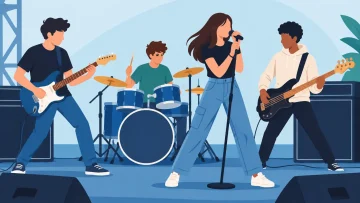
A drummer has a unique role in a band. Guitarists and singers can practice alone for a long time without needing to respond to another person in the moment. Drummers can too, but the instrument changes when it becomes part of a group. The drummer sets the pulse, supports transitions, controls volume, and helps the whole band stay connected.
That is why performance opportunities and ensemble playing can be so powerful. They teach skills that are hard to learn from a screen: how to count off a song, listen across the stage, adjust when a guitarist misses a cue, leave space for a vocal, and keep moving after a small mistake. Students also learn that being a great drummer is not about playing the most notes. It is about making the band sound better.
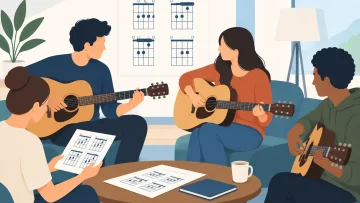
At Music Academy Asheville, students who are ready to move beyond the practice room can build those skills in a supportive band setting. Rock Academy gives young musicians and adults a place to rehearse with peers, explore different styles, and prepare for real performance experiences. For a student who says, “I want to play with other people,” that social side of music can be the missing piece.
How to Choose the Right Starting Point
Start with the goal, not the label. If the goal is to learn a few favorite songs for fun, self teaching may be a perfectly satisfying route. Set a simple routine, use a metronome, record yourself occasionally, and choose songs that are challenging without being overwhelming.
If the goal is to build dependable technique, join a school band, perform with friends, prepare for auditions, or play live, lessons usually offer a faster and more complete path. The same is often true for students who feel stuck, lose motivation easily, or are not sure what to practice next.
Parents can look for a teacher who makes beginners feel comfortable while still setting meaningful goals. The first lessons should not feel like a test. They should help a student make a good sound, play a real beat, understand a little more each week, and leave excited to try again.
Adults should give themselves that same permission. You do not need childhood experience, a perfect practice space, or a future career in music to deserve instruction. You only need an interest in learning and a willingness to show up consistently.
The best first step may be as simple as sitting at a kit, playing one steady beat, and noticing how good it feels when the rhythm settles in. From there, choose the support that makes you want to keep playing – and find people who will be excited to hear you do it.