The first sound at rock camp is rarely perfect. A guitar player may be finding the opening riff, a drummer may be testing a beat, and a singer may be quietly running through lyrics. Then the room starts to lock in. By the end of the day, that collection of individual players is becoming a band – and that change is the real magic of camp.
If you are wondering what happens at rock camp, expect much more than students sitting alone and practicing scales. Rock camp is a focused, high-energy music experience where young musicians learn songs, rehearse with peers, receive coaching from working instructors, and prepare for the excitement of performing together.
What happens at rock camp each day?
A typical day blends skill-building with the hands-on work of making music as a group. Students spend time with their instruments, but they also learn how to listen, communicate, make musical choices, and keep going when a song does not click right away.
The schedule can vary by age group, camp length, and the students enrolled. A beginner-heavy group may spend more time learning fundamental parts and understanding song structure. A group with experienced players may tackle more detailed arrangements, improvisation, harmonies, or stage presence. In both cases, the goal is the same: help every student contribute to a real band performance.
Students join a band
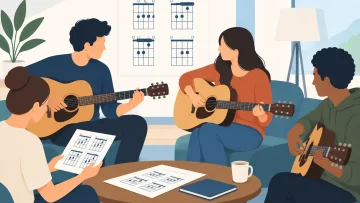
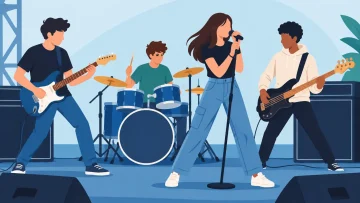
One of the biggest differences between rock camp and a standard music class is the band itself. Students are grouped with other musicians, usually around the instruments needed for a complete lineup: vocals, guitar, bass, drums, keyboards, and sometimes additional instruments.
Instructors consider age, experience, instrument, and personality when putting groups together. The goal is not to create a competition for the most advanced musicians. It is to create a supportive team where students can learn from one another and have a meaningful role in the music.
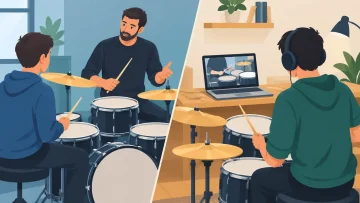
For a student who has only played guitar alone in their bedroom, hearing a full band come in behind their part can be a huge moment. For a drummer used to practicing with headphones, learning to lead a group through tempo changes builds a different kind of confidence. Every musician discovers that playing well is not just about being heard. It is about helping the whole song work.
The band learns songs together
Campers learn songs that fit their group and stretch their current skills. Depending on the camp theme and student interests, that might mean classic rock, punk, blues, hard rock, surf, Americana, or another style that gets the room moving. Rock music has a long history, but there is plenty of room for students to bring their own tastes into the process.
Learning a song in a band is different from learning it alone. A guitarist may need to simplify a difficult chord shape at first so they can stay in time. A vocalist may work on coming in confidently after an instrumental intro. A bass player may learn how their line fits with the kick drum, while a keyboard player learns when not to play so the arrangement has space.
These are practical musical lessons that are hard to learn from a worksheet. Students begin to understand verses, choruses, bridges, intros, endings, dynamics, cues, and transitions because they are using them in real time.
Rock camp builds more than instrumental skills
The most valuable moments at camp often happen between the notes. A student misses an entrance, stops, and learns how to find their place again. A band disagrees about an ending and has to listen to one another before making a choice. Someone who is nervous about singing tries a line at rehearsal and gets encouragement from the room.
Those experiences develop resilience, collaboration, and self-trust. They also make private lessons feel more connected to a student’s goals. Practicing a chord progression has new purpose when that progression is part of the song their friends are counting on them to play.
At Music Academy Asheville, students work with instructors who understand both teaching and performing. They know when to break down a challenging rhythm, when to offer a simpler option, and when to encourage a student to take the next step. That balance matters. Camp should be challenging enough to create growth, but never so intimidating that students feel they do not belong.
Beginners can participate
A common question from parents is whether a child needs years of lessons before attending rock camp. Usually, the answer is no. Music experience helps, especially when students are learning a full set of songs in a short time, but beginners can absolutely participate when the camp is designed with clear instruction and realistic parts.
A new guitarist might play a simplified rhythm part. A beginning drummer may focus on a steady groove. A student with a strong interest in singing but little formal training can learn how to follow lyrics, find pitches, and use a microphone. Camp is often where a beginner realizes that they are capable of more than they expected.
That said, the best fit depends on the individual student and the specific program. A camper who has never held an instrument may benefit from a beginner lesson or introductory group class first. A student with some basic familiarity can often gain a lot from the motivation and social energy of playing in a band.
Experienced students find a new challenge
More advanced musicians benefit, too. Playing with a group asks for skills that solo practice can overlook: holding a steady tempo, responding to another player’s choices, shaping a song dynamically, and recovering quickly from mistakes.
Experienced campers may take on lead parts, solos, vocal harmonies, difficult rhythms, or leadership roles within their group. They also learn an essential lesson for any performer: flashy playing only works when it serves the song. A strong band member knows when to step forward and when to support someone else.
Rehearsals turn into a performance
As camp progresses, rehearsals become more focused. Students run songs from beginning to end, work through rough transitions, decide how to start and finish each piece, and practice the small details that make a set feel polished.
Performance preparation is not about demanding perfection. Live music is alive precisely because it includes risk, personality, and the occasional surprise. The purpose of rehearsal is to help students feel prepared enough to enjoy the moment rather than freeze in it.
Campers may also talk about stage basics: how to count in a song, make eye contact with bandmates, adjust volume, use a microphone, acknowledge the audience, and keep playing if a mistake happens. These are useful skills whether a student dreams of performing for hundreds of people or simply wants to feel comfortable sharing music at school, church, a family gathering, or a local open mic.
The final show gives the work a purpose
Many rock camps end with a showcase or live performance for families and friends. For students, this is more than a recital. It is the moment when the band gets to share something they built together.
Parents often see a remarkable change from the first day. The child who was hesitant to introduce themselves may be standing with a band onstage. The student who said, “I do not think I can do this,” may be counting off the next song. Even when nerves are present, students learn that courage does not mean feeling completely calm. It means showing up, taking a breath, and playing anyway.
The performance is also a celebration of effort. Some bands will sound tight from the first rehearsal. Others will have to work harder to find their groove. Both groups can have a meaningful show because the accomplishment is not limited to technical difficulty. It is about commitment, teamwork, and the willingness to create something together.
What campers should bring
Students should generally bring the instrument they are most comfortable playing, along with the practical items that help them participate fully. Guitarists and bassists may need picks, straps, and cables. Drummers may bring sticks. Vocalists benefit from water and a lyric notebook. Camp staff can usually clarify what equipment is provided and what students should bring from home.
Just as important, campers should bring curiosity. They do not need to arrive knowing every song or already feeling confident onstage. They need a willingness to listen, practice, try again, and support their bandmates.
Rock camp gives young musicians a place to be loud, creative, focused, and part of something bigger than a single lesson. The next time your child taps out a beat on the kitchen table or plays the same riff for the tenth time, it may be worth asking a simple question: who could they make music with?